Monday, May 9, 2016

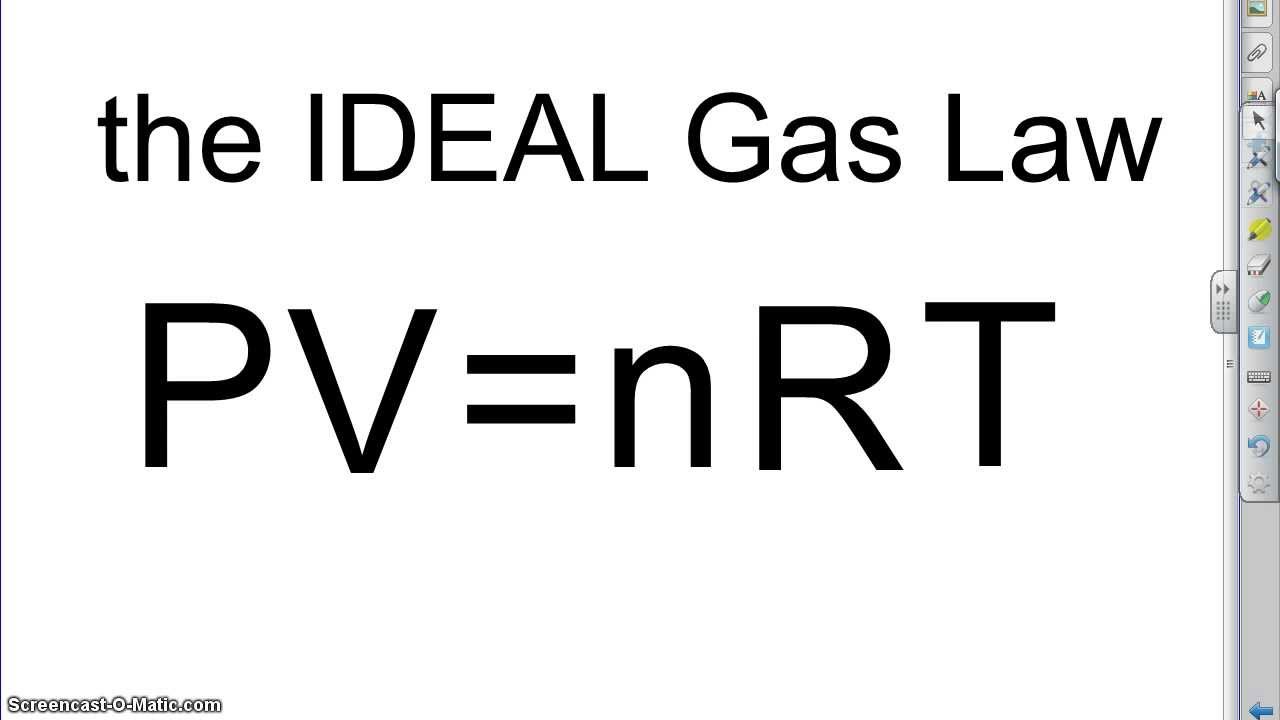
Gas Laws Formulas


Conversions to be memorized
Unit
Average Air Pressure at Sea Level
Pascal (Pa)
101325
kilopascal (kPa)
101.325
Atmosphere (atm)
1
Millimeters of Mercury (mmHg)
760
Inches of Mercury (inHg)
29.92
Torr (torr)
760
Pounds per Square Inch (psi)
14.7

Finding Kelvin:

Celsius+273.15=Kelvin

STP (Standard temperature and pressure):

1 atm and 0 degrees Celsius

Boyle's Law:

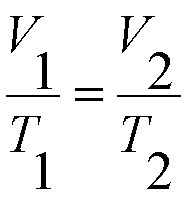
Charles' Law:

Avagadro's Law:
Combined Gas Law:


Links and Videos

Videos:
I always like to watch the videos by John Green over the unit because they're fun videos that also do a good job of explaining the material

If you like a more serious and informative video you could try Khan Academy

Information sites:

This site contains a lot of the same material we got in class

This site has information over all the laws

Ideal Gas Law

Quizlet

Test Prep:

Quia

Gas Laws Practice Fill in the answer


Weekly Quiz

I thought that the hardest part of this quiz was the concept questions. I think I did alright on the questions with math because I spent a lot of time practicing those from the practice quizzes online. I definitely need to spend more time on really understanding the conceptual aspects of this unit by watching videos or something. I find that Khan Academy has a lot of helpful videos but sometimes I get lost paying attention to them so I need to find other options so I get the best possible understanding. I also think I would have benefited from dedicating more time towards studying for this quiz.

Construction of an Air Bag Lab

I had to sit out for this lab because I left the math for the lab at home. I still can't believe I was so stupid. I don't know why I left it at home really I could've swore I put it in my folder with my procedure. I even tried it at home and everything to make sure I wouldn't fail in class but I ended up failing anyways because I didn't even get into the lab. :( 
You can bet I won't ever do this again, but I guess there's nothing I can do about it now so why stress over it right?


Saturday, April 23, 2016

Specific Heat Capacity of a Metal Lab


In this lab, we heated a metal and poured it into water to see the transfer of heat that we have been studying this unit. This lab really showed us how quickly the heat transfers and showed us that in the real world energy isn't completely transferred as we want it to. We saw that energy is lost into the universe as we pour the heated metal into the water. Doing the calculations for this lab also helped me a lot because we got to use our own data to practice the math in this unit. I think the math was slightly confusing in this unit but this lab clarified what we learned because it took us through the process step by step. 

Energy from Food Lab

I'm kind of disappointed that we didn't get to do this lab, but I completely understand that we didn't have enough time for it. Instead, I'm glad we finished our lecture and went over some problems together with Mrs. Frankenberg. I think that helped me a lot because it clarified a lot of the confusions that I had from both lectures. Even though I learn a lot from the labs by doing the actual application of what we learned in class, it wasn't worth squeezing it into the already tight schedule this week.

Unit Test and Review

I was really scared for this test because I didn't feel like I understood most of the information. The fact that we also had a shortened class period was also stressing me out. To study for the test, I mostly did the practice tests online to study for the test. I also went over the notes and used resources that I found to help me study.

The test wasn't as hard as I feared it would be, but a few of the questions were really hard. I really hope I did decent on the test because I really want to exempt the final for this semester. I found that the questions were mostly concept based and not math based. I'm kind of glad that it wasn't a lot of math because that takes me a while and I wasn't very good at the math questions on the practice quizzes.

Energy and Phase Diagrams
Energy
  • energy is released as heat or work
  • law of conservation of energy: energy is never created nor destroyed
  • Thermodynamics: the study of energy transformations
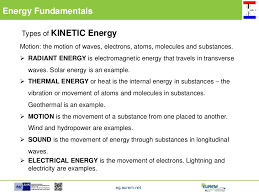
Types of Energy
  • Kinetic Energy: energy of motion
   
 
  • Potential Energy: energy stored (in the composition of a substance or energy of position)

Temperature and Heat
  • temperature: average kinetic energy
  • heat: transfer of energy
  • Points of view: system (area of focus in the universe) and the surroundings (everything else in the universe)
Endothermic vs Exothermic

Measuring Energy Changes
  • unit for measuring energy: Joules (J)
  • or calorie (little c)= amount of energy to raise temp of 1 gram of substance by 1 degree Celsius
  • 1 c = 4.184 Joules
  • make sure to watch for units
Calculating Heat
  • if mass is not given and density is given, use the density formula: d=m/v
  • density of water at 25 degrees Celsius: 1
  • 1 KJ = 1000 J
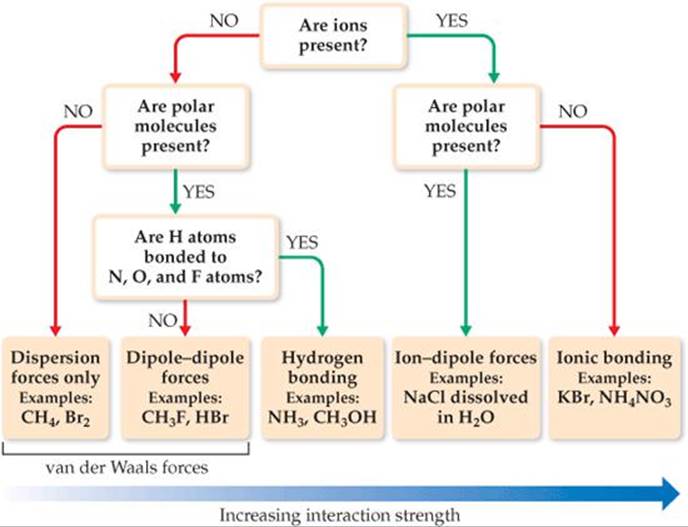
Determining Intermolecular Force:

  • London Dispersion Force: when the electromagnetic difference is small (weakest force)
  • Dipole-Dipole: large electromagnetic difference 
  • Hydrogen Bond: only occurs between Hydrogen and Flourine, Oxygen, Nitrogen or Chlorine
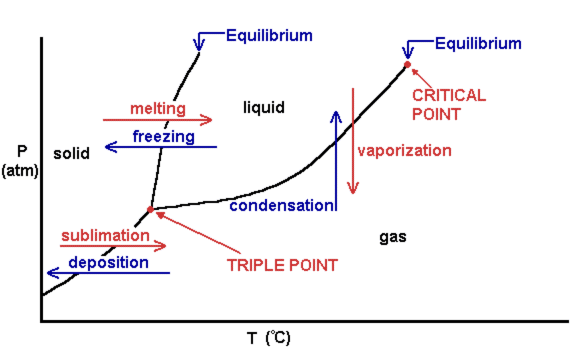
Phase Changes



Monday, April 18, 2016

Biodiesel


This unit was more of a real world experience kind of thing and along the way through our research and projects I think we learned a lot.

Here are some links that I used to learn about Biodiesel:
http://www.americasadvancedbiofuel.com/ (this is the link for the actual biodiesel company)

http://www.afdc.energy.gov/fuels/biodiesel.html

http://www.fueleconomy.gov/feg/biodiesel.shtml this link analyzes biodiesel as a fuel source

Here are some videos about biodiesel:
Mythbusters Biodiesel

https://www.youtube.com/watch?v=aLmF4IA2mfI

Apparently there's a whole magazine about biodiesel


Boat Races

The boat races were really fun and interesting. I think it was cool and rewarding to see the biodiesel that we made actually power something. It kind of showed us that biodiesel is a very real energy source option and showed us how easy it could be to switch to using it. The race also made it more competitive and exciting to try to make the best possible boat design. The extra credit opportunity also motivated us haha. We had a lot of difficulties with ours because our first model only went for a little while and kept getting stuck. Then, our engine had a hole in it. However, we got a different engine and made a different boat model and it finally worked.

Sunday, April 10, 2016

Making of Biodiesel


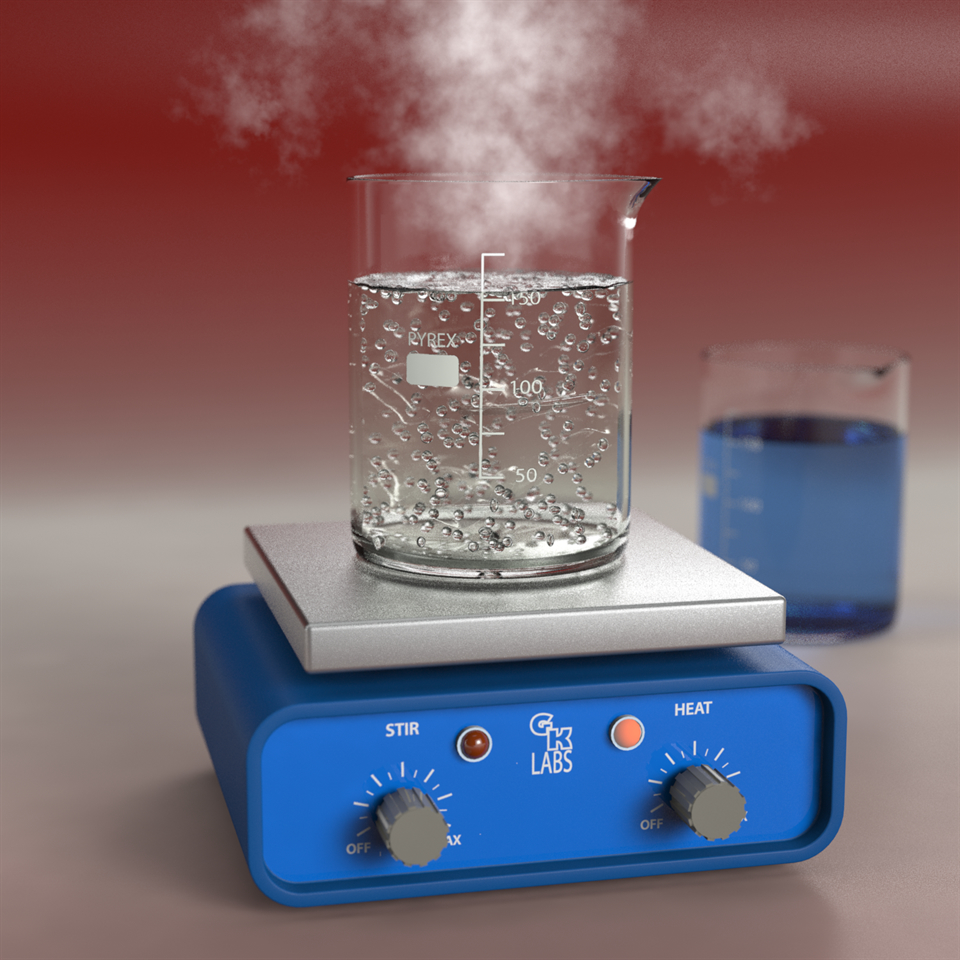
Making the biodiesel itself wasn't as difficult as some of our other labs. The process of transesterification was quite simple really. We started with the waste oil (from Chick-Fil-A) and added a base of KOH. Then we heated and stirred the solution so the reaction would occur. The reaction yielded biodiesel (methyl esters) and glycerol. We will be testing the purity of the biodiesel and then using the biodiesel that we created to race putt putt boats.


Bio-diesel Video


I already really like this unit! Making the video was really fun because it was a creative project that we had to understand the information to do. Our video featured a cat and hedgehog (animals courtesy of Haley Cundiff) and the cat convinced the hedgehog to convert to biodiesel as a fuel source. Filming the animals was hard because they didn't want to do what we wanted them to do, but it was still fun. Editing the video was probably the worst part because we had to pick certain parts of the video where the animals were cooperating and then we had to voice over to make it seem like it was the animals talking (even though it didn't look like the animals were talking).

Here's the link to our video


Wednesday, March 16, 2016

Unit Test Practice


Links
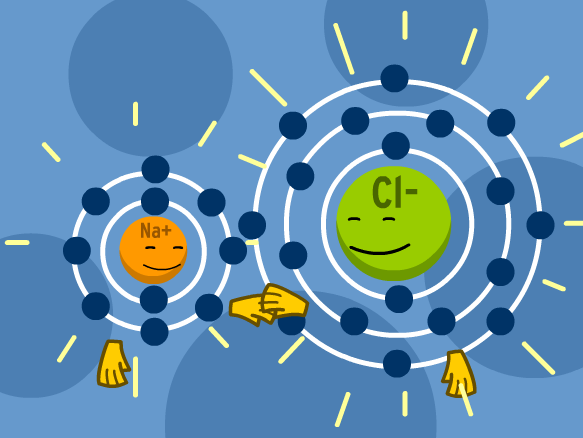
Lewis Structures Practice --- Answers
This Link explains how to draw 3D Lewis structures and shows a few examples
Chemical Bonding Practice Multiple Choice Test
Formal Charge Khan Academy Video
Bond Polarity
Lewis Structures Khan Academy- this video showed a different way of drawing these bonds but I liked it a lot better because for simpler ones, it was very time saving

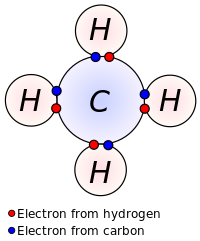
In the practice tests I thought this Lewis Structure was really hard so here is the correct structure for anyone else who had the same problem


Unit Exam


The Unit Exam had a lot more questions than I expected and I think that was the worst part of the test. Most of the questions were similar to what we were used to and just a few were really difficult. I felt confident about all the ones I had time for, but I still felt really rushed. I think many of the questions were similar to the ones on the practice tests online and doing those helped a lot. I was worried that I would be completely lost this unit especially since I missed two days of class, but I wasn't as confused as I thought I would be. Overall, I think I would have done really well if we had more time or less questions.

Sunday, March 13, 2016

Modeling Lab


I really liked this activity because it was a more fun, hands on way of learning. Going into the lab I was completely lost on the unit and didn't really understand how to place the electrons and such. The first few that I did I was very nervous and had a lot of questions. However, as we went through the lab I got more confident about the process and was able to do it better on my own. I'm really glad that we did this activity because it actually helped me a lot.

Wednesday, March 9, 2016

Acids and Bases Unit Exam


This test was really difficult and I felt like many of the problems were more complex than what I had been studying. This unit was just difficult for me over all and I hope I did decent enough on the test. I studied a lot and I spread out my studying more this unit. I found that the online resources on schoology are my favorite things to study because it gives me a feel for what the test will really be like.

My grade wasn't too good on the test and I hope I will be able to fix my mistakes when we get them back. I expected to do poorly on this test but I think I did slightly better than I had expected which is good I guess.

Friday, March 4, 2016

Fireworks video and worksheet


I thought it was cool that we learned about this for this unit because it shows us a real world application of the stuff we learned this unit. I didn't know that elements were burned to create the colors, I always thought it was some other type of dye or something I don't really know. Fireworks are really fun and I love setting them off during the 4th of July, but from now on I'll probably have flashbacks of this class when ever I see fireworks. I also thought this was a nice way to start the unit because it made us more interested in the topic before we started learning.


Test pushed back!


I'm beyond glad that the test was pushed back because this unit is making me really nervous. We haven't done a information based unit in a while and it's mostly been all math so this is a slight change. I'm not that great at remembering rules, numbers, and etc so this is a rough unit for me.

Unit Summary: 
The Wave Nature of Light


  • Electronic structure: arrangement of electrons in an atom
  • visible light: ROY G BIV from least to highest energy
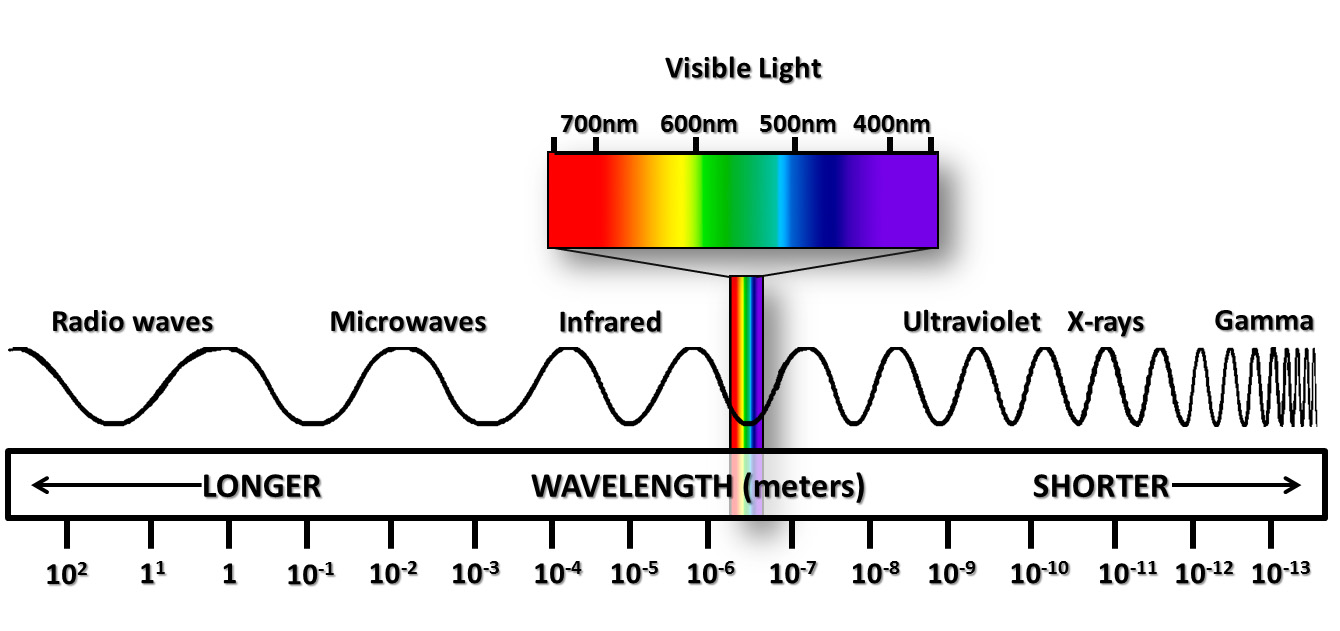
  • << electromagnetic spectrum
  • higher amplitude and shorter wavelength= more energy


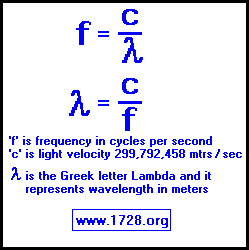
Wavelength formula: 
C= 3.0*10^8
Energy Formula: 

 H= 6.63*10^-34

Organization of Electrons:
  1. Principal Energy Level: n=1,2,3,4,5,6,7 (distance from nucleus)
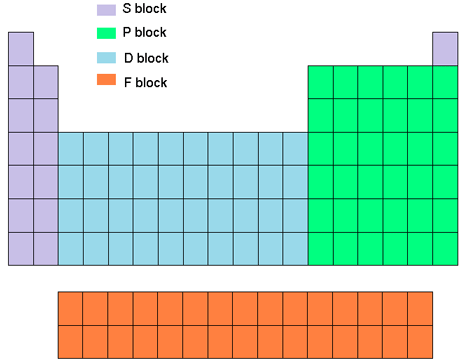
  2. Sublevel: s,p,d,f (different sections on table)
  3. Orbitals: s- 1, p-3, d-5, f-7; each orbital holds 2 electrons max
  4. Spin: Can have either an upward (+1/2) or downward (-1/2) spin
Rules for placing Electrons: 
  • Aufbau Principle: electrons enter orbitals lowest energy first
  • Pauli Exclusion Principle; an orbital can only contain 2 electrons with an opposite spin
  • Hund's Rule: within a sublevel, electrons must enter singly (positive first) 
Energy Level Diagram for Sublevels: Electron Configurations:
  • read from left to right
  • Short cut with putting previous noble gas in brackets [ ]
  • Exceptions where you remove one electron from the s sublevel and add to the p: Co, Cr, Mo, W, Ag, Au
Configuration of Ions: add or remove the appropriate amount of electrons from the highest principal energy level first


Quantum numbers

  • basic set up: (n, l, ml, ms)


Links I used to help me study:

Unit Test


I don't feel very good about this exam. I wasn't expecting that many questions on the test and I felt very rushed. I think maybe if I had more time I would have done a lot better. I think the hardest part for me was the periodic trends because they're still really confusing. The wavelength questions were also harder on this test than I expected so I don't think I did so well on it.

Tuesday, March 1, 2016

Weekly Quiz #1


This unit feels kind of weird so far because our past units have been heavily math based, but this one is more material based. I'm not very good at remembering facts and memorizing numbers and such so I was pretty scared for this quiz. I did the practice quizzes that Mrs. Frankenberg put up and went through all my notes. I thought I did alright on the quiz: as in maybe didn't flat-out fail. When we got the results back, I found that I didn't do terribly and I missed all the ones I thought I missed which I went over and now understand.