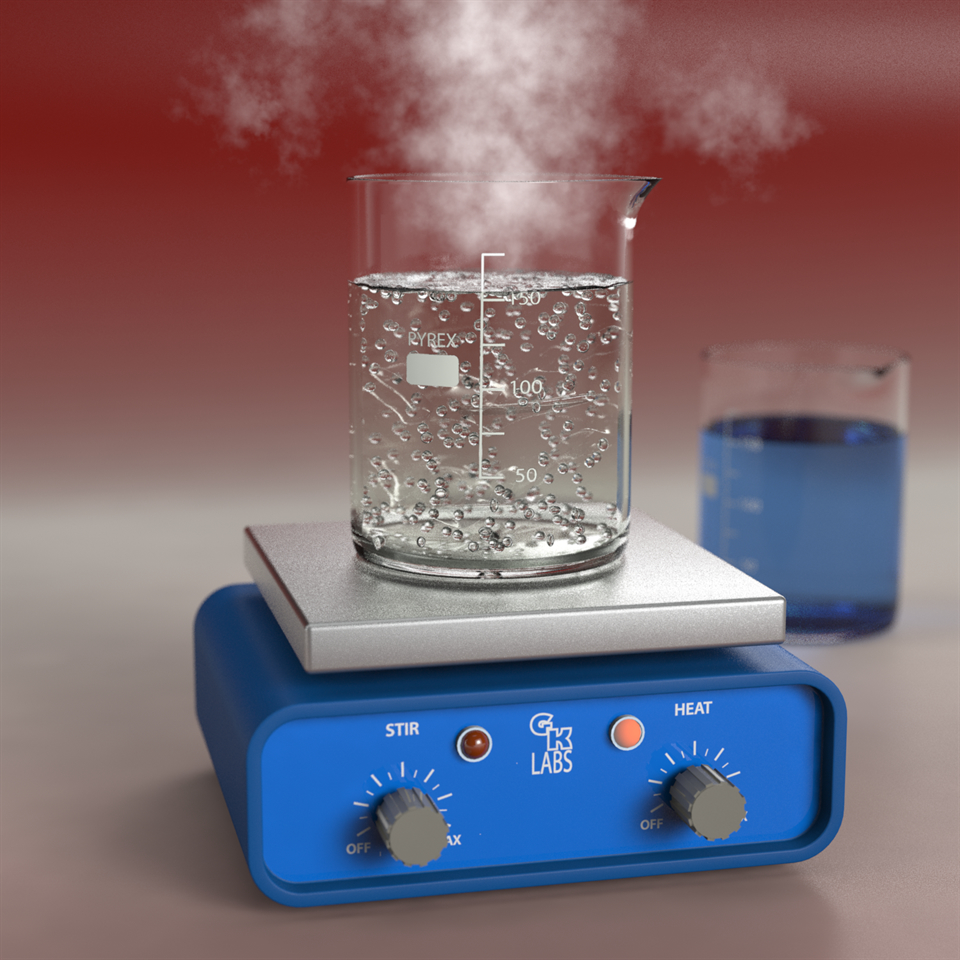
In this lab, we heated a metal and poured it into water to see the transfer of heat that we have been studying this unit. This lab really showed us how quickly the heat transfers and showed us that in the real world energy isn't completely transferred as we want it to. We saw that energy is lost into the universe as we pour the heated metal into the water. Doing the calculations for this lab also helped me a lot because we got to use our own data to practice the math in this unit. I think the math was slightly confusing in this unit but this lab clarified what we learned because it took us through the process step by step.
Showing posts with label Energy and Phase Diagrams. Show all posts
Saturday, April 23, 2016
Energy from Food Lab
I'm kind of disappointed that we didn't get to do this lab, but I completely understand that we didn't have enough time for it. Instead, I'm glad we finished our lecture and went over some problems together with Mrs. Frankenberg. I think that helped me a lot because it clarified a lot of the confusions that I had from both lectures. Even though I learn a lot from the labs by doing the actual application of what we learned in class, it wasn't worth squeezing it into the already tight schedule this week.
Unit Test and Review
I was really scared for this test because I didn't feel like I understood most of the information. The fact that we also had a shortened class period was also stressing me out. To study for the test, I mostly did the practice tests online to study for the test. I also went over the notes and used resources that I found to help me study.
The test wasn't as hard as I feared it would be, but a few of the questions were really hard. I really hope I did decent on the test because I really want to exempt the final for this semester. I found that the questions were mostly concept based and not math based. I'm kind of glad that it wasn't a lot of math because that takes me a while and I wasn't very good at the math questions on the practice quizzes.
Temperature and Heat
Measuring Energy Changes
The test wasn't as hard as I feared it would be, but a few of the questions were really hard. I really hope I did decent on the test because I really want to exempt the final for this semester. I found that the questions were mostly concept based and not math based. I'm kind of glad that it wasn't a lot of math because that takes me a while and I wasn't very good at the math questions on the practice quizzes.
Energy and Phase Diagrams
Energy
- energy is released as heat or work
- law of conservation of energy: energy is never created nor destroyed
- Thermodynamics: the study of energy transformations
- Potential Energy: energy stored (in the composition of a substance or energy of position)
- temperature: average kinetic energy
- heat: transfer of energy
- Points of view: system (area of focus in the universe) and the surroundings (everything else in the universe)
Endothermic vs Exothermic
- unit for measuring energy: Joules (J)
- or calorie (little c)= amount of energy to raise temp of 1 gram of substance by 1 degree Celsius
- 1 c = 4.184 Joules
- make sure to watch for units
Calculating Heat
- if mass is not given and density is given, use the density formula: d=m/v
- density of water at 25 degrees Celsius: 1
- 1 KJ = 1000 J
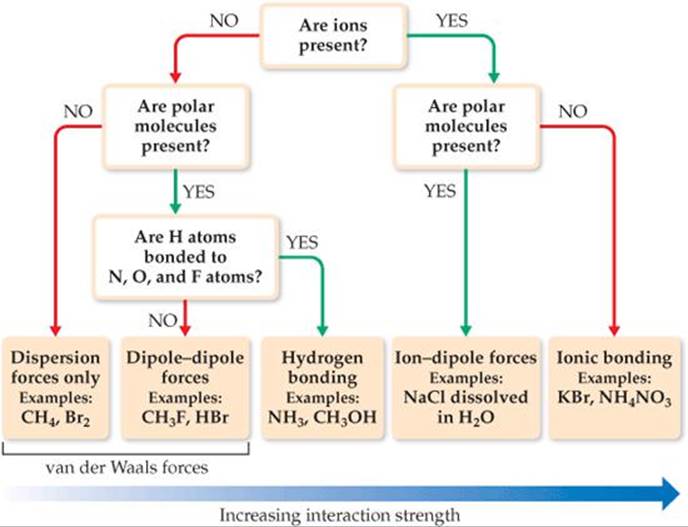
Determining Intermolecular Force:
- London Dispersion Force: when the electromagnetic difference is small (weakest force)
- Dipole-Dipole: large electromagnetic difference
- Hydrogen Bond: only occurs between Hydrogen and Flourine, Oxygen, Nitrogen or Chlorine
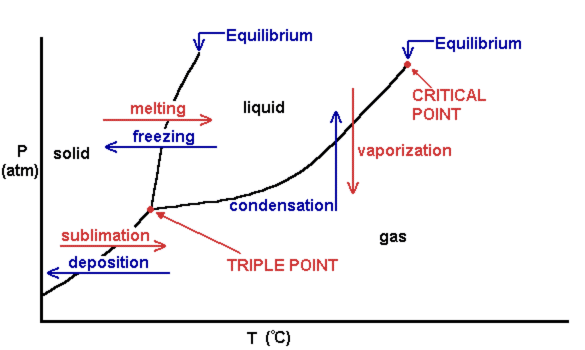
Phase Changes
Thursday, April 21, 2016
Energy and Phase Changes links
What I had the most trouble with this unit was understanding the different intermolecular forces so here are a few videos that I watched that helped me understand it better:
https://www.khanacademy.org/science/organic-chemistry/gen-chem-review/electronegativity-polarity/v/intermolecular-forces-and-molecular-bonds
https://www.khanacademy.org/science/organic-chemistry/gen-chem-review/electronegativity-polarity/v/dipole-moment
Practice for intermolecular force:
http://www.chem.umass.edu/genchem/chem112/MCQ_Intermolecular_Forces.htm
Intermolecular forces:
http://chemistry.bd.psu.edu/jircitano/IMforces.html
Quizlet:
https://quizlet.com/19765867/energy-and-phases-changes-flash-cards/
https://www.chem.wisc.edu/deptfiles/genchem/netorial/rottosen/tutorial/modules/intermolecular_forces/02imf/imf2.htm
https://www.khanacademy.org/science/organic-chemistry/gen-chem-review/electronegativity-polarity/v/intermolecular-forces-and-molecular-bonds
https://www.khanacademy.org/science/organic-chemistry/gen-chem-review/electronegativity-polarity/v/dipole-moment
Practice for intermolecular force:
http://www.chem.umass.edu/genchem/chem112/MCQ_Intermolecular_Forces.htm
Intermolecular forces:
http://chemistry.bd.psu.edu/jircitano/IMforces.html
Quizlet:
https://quizlet.com/19765867/energy-and-phases-changes-flash-cards/
https://www.chem.wisc.edu/deptfiles/genchem/netorial/rottosen/tutorial/modules/intermolecular_forces/02imf/imf2.htm
Subscribe to:
Posts (Atom)